

Bring the problem.The stack is a consequence.
BuildKairo is an independent software consultancy helping ambitious businesses design, build, and scale exceptional digital products.
We build client software start to finish: mobile, web, backend, payments, AI, infrastructure. Which of those a project uses is decided by the problem, not by what we already know. Two engineers, both accountable for what ships, and no layer between you and the people writing the code.
Four kinds of work.
One accountable team.
There is no house stack. The products below share a language and almost nothing else.
Spec, architecture, build, launch, handover.
Native iOS and Android, a web app, or both when the product needs both.
Gateways, instalments, OTP, tax invoicing, webhooks.
A model call is a dependency with a latency budget and a failure mode.
FreshCheck
Photograph it. Never lose it to the back of the fridge.
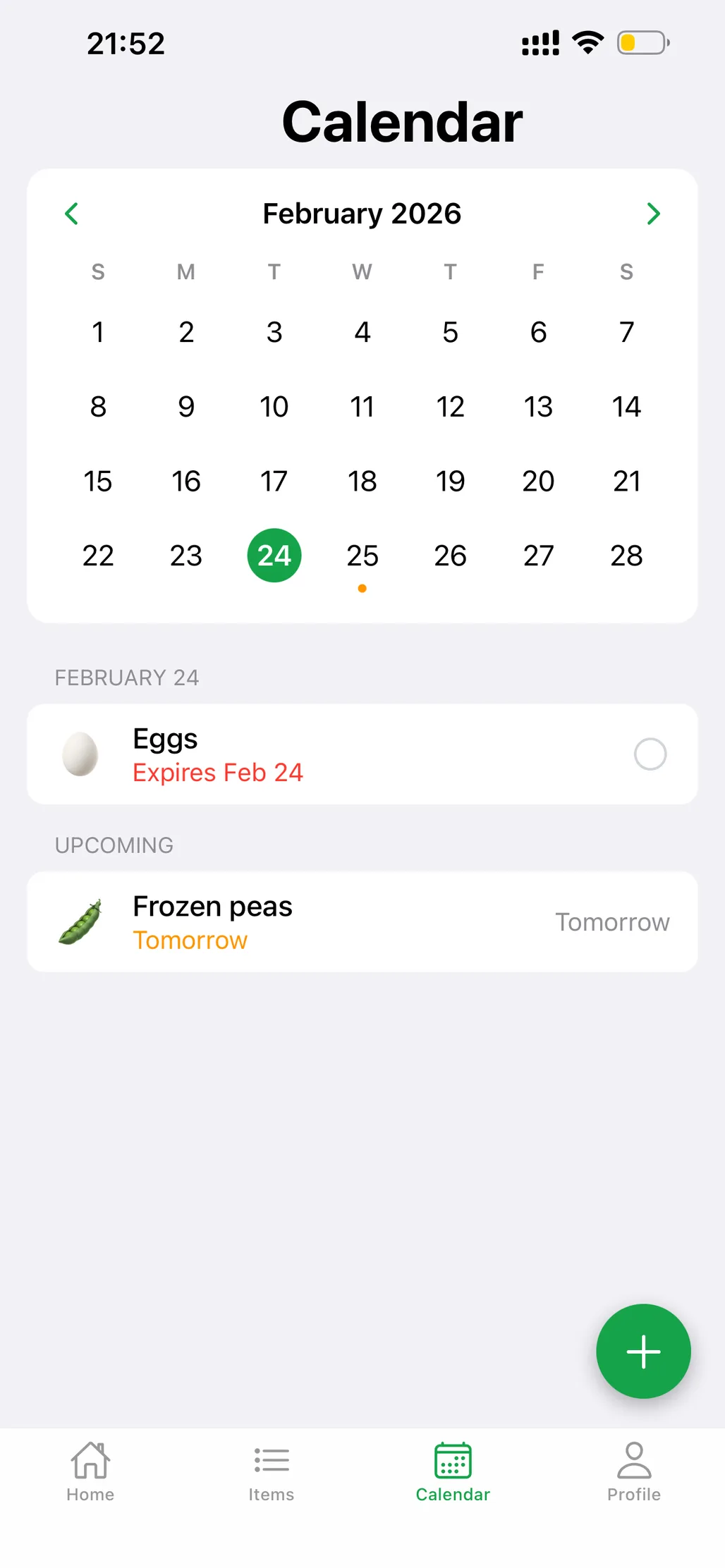
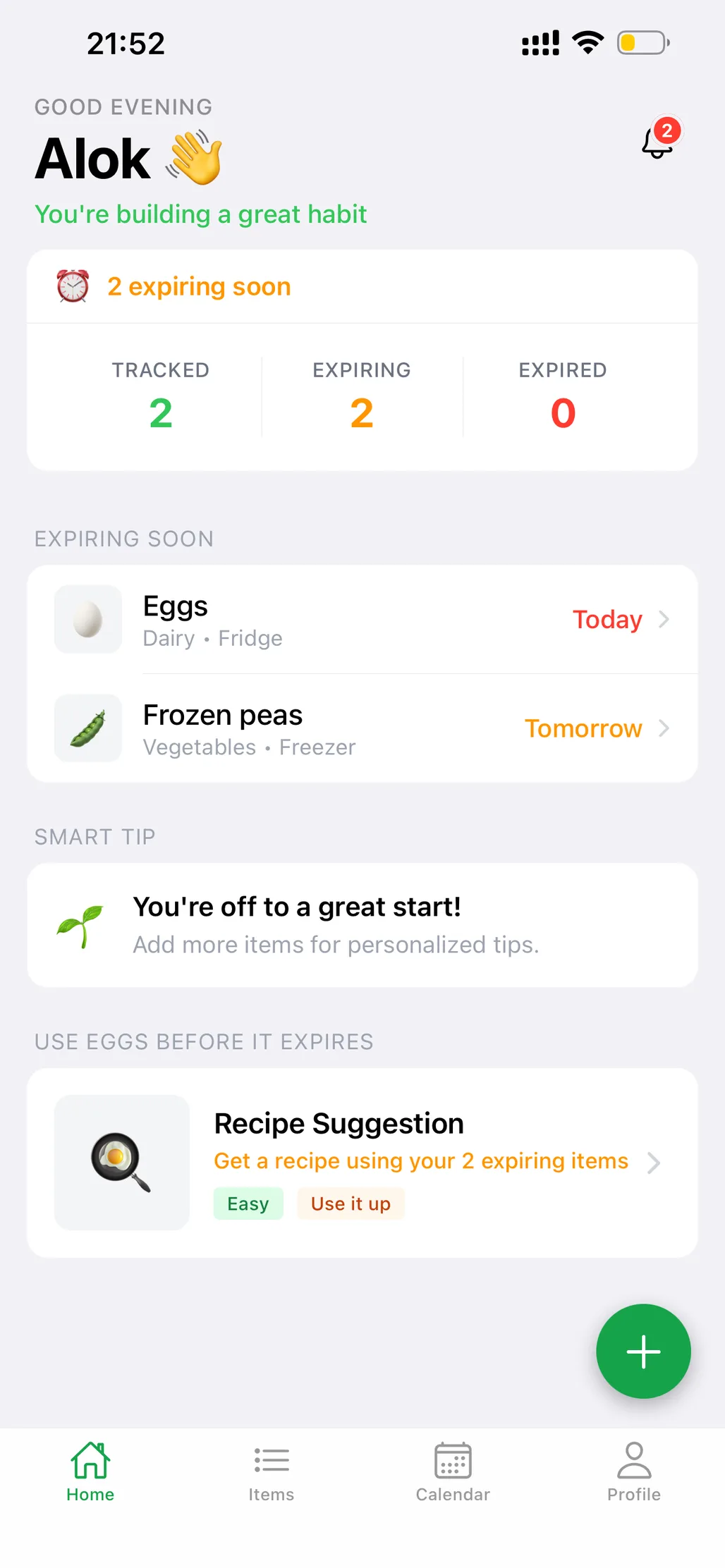
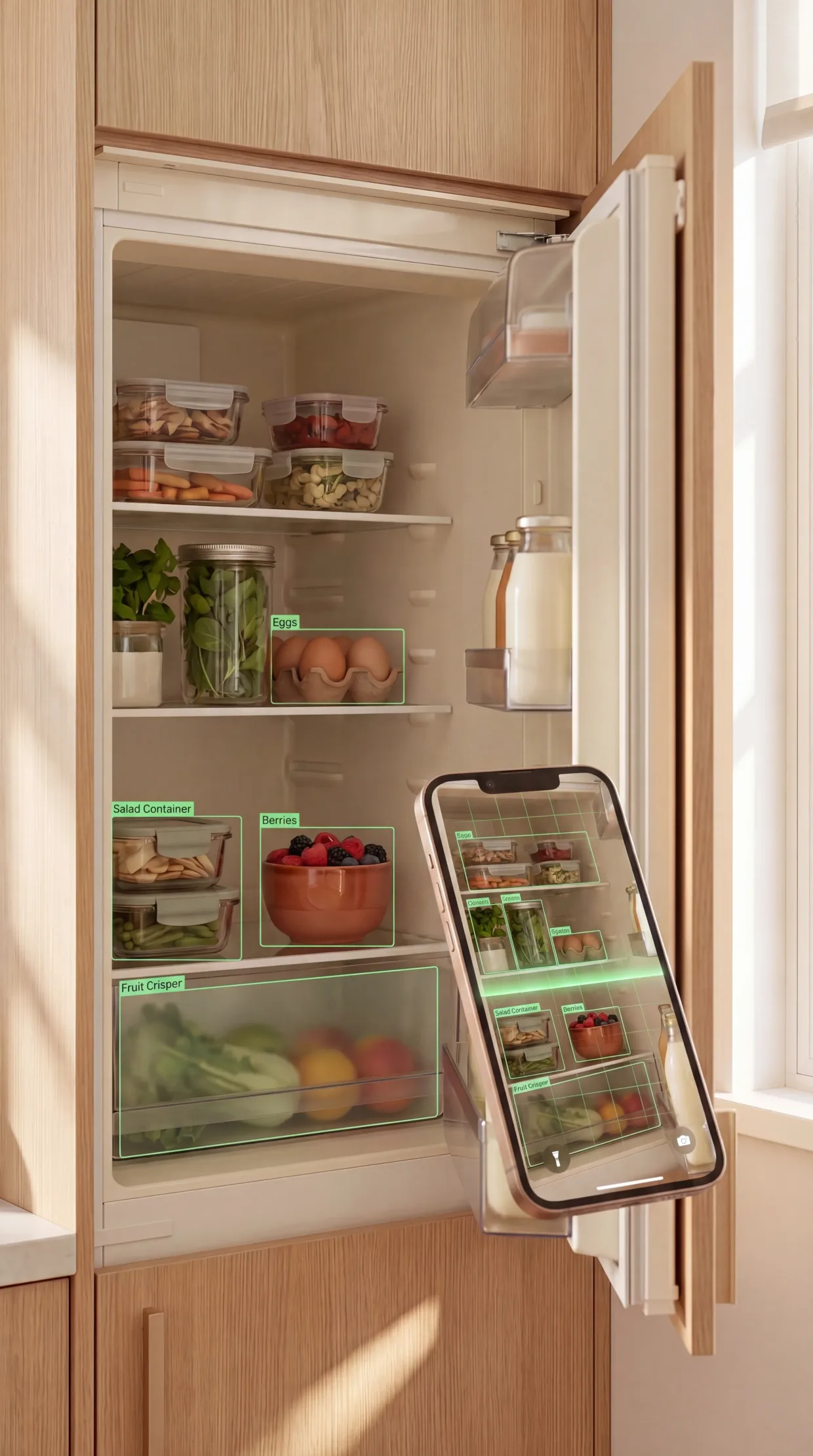
Photograph the groceries. A vision model reads what it is and when it expires, and the app tells you before it goes off. One photo, one tap, everything tracked, on iOS and Android, both live on the public stores.

Flyfox
Catalog in. On-brand assets out.
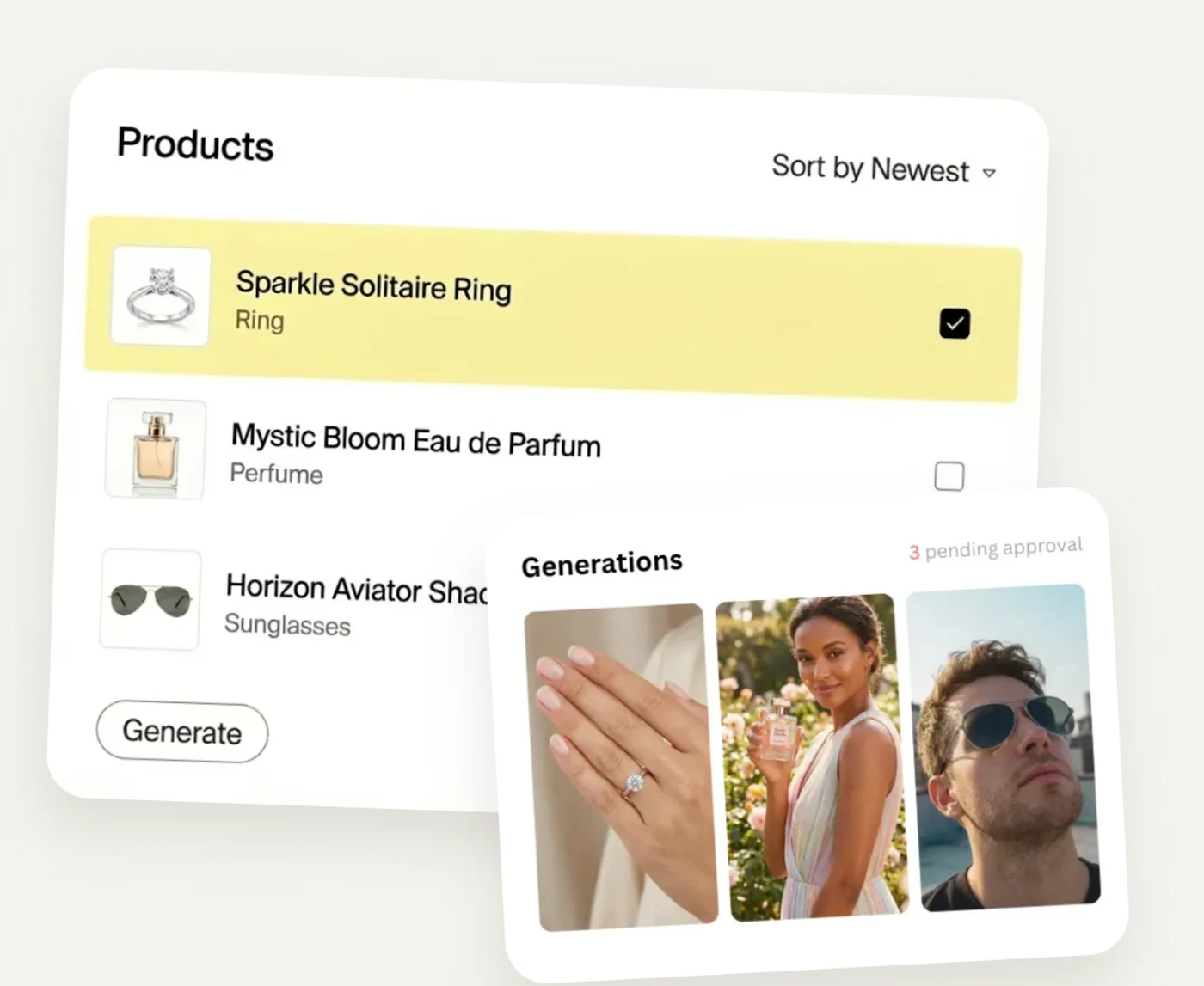
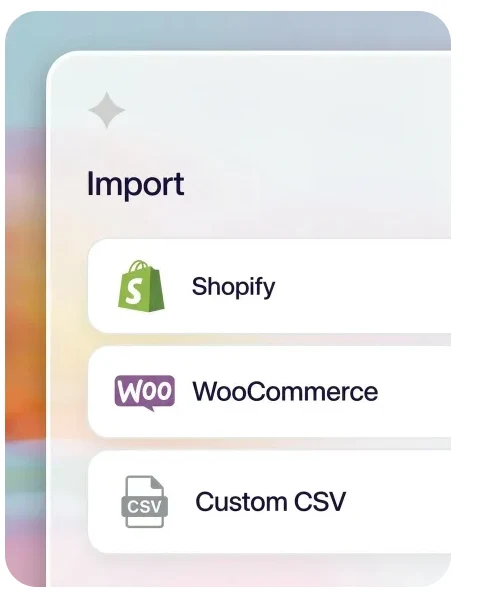
An e-commerce store connects its catalog and gets product images, video and copy generated across the whole range. Not one item at a time, and not off-brand.
BoxBox
Describe the fault. Get it booked.
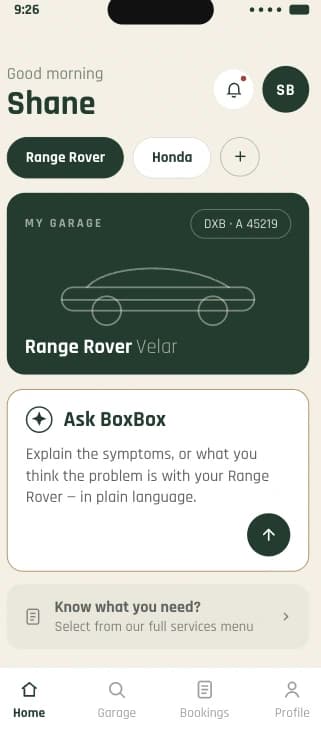
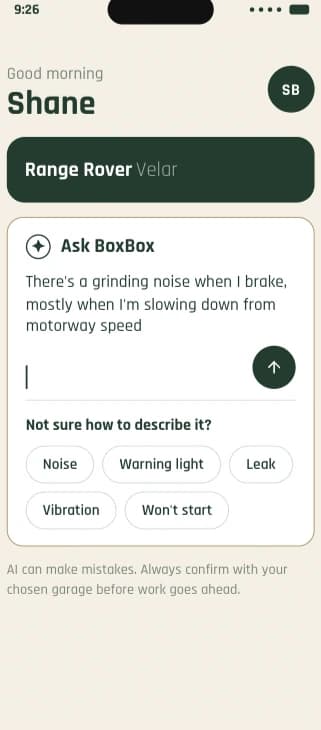
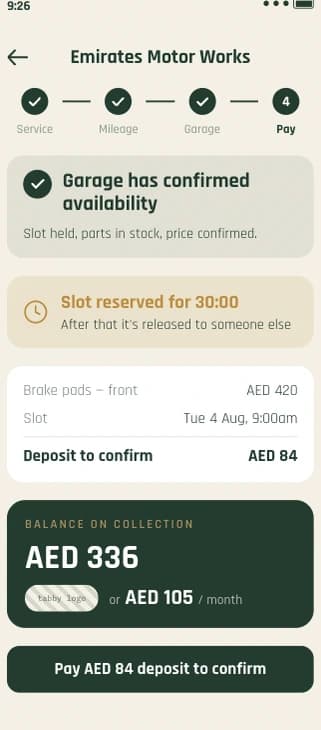
A marketplace for the UAE's independent garages. A car owner describes what the car is doing, a model works out what that probably is, and the platform matches it to a garage equipped to fix it at a price agreed before anyone commits.
Different problems.
Different stacks.
A consumer mobile app, a content platform and a two-sided marketplace. They share almost no technology with each other, and that is the point. Read down the columns.
- Client
- Native iOS + Android app
- Backend
- Supabase edge functions
- Compute
- Edge functions + pg_cron
- Model use
- Vision, reads a date off a photo
- Hard part
- 12 date formats, one shape
- Money
- RevenueCat, store-managed
- Integrations
- None. Device and cloud only
- Offline
- Reminders fire with no network
- Distribution
- App Store + Google Play
- Shape of work
- Same two engineers
- Client
- Web platform
- Backend
- Platform API over bulk jobs
- Compute
- Provider routing per task
- Model use
- 12 providers, chosen per job
- Hard part
- Brand consistency at catalog scale
- Money
- Credit metering, tiered plans
- Integrations
- Shopify, WooCommerce, CSV
- Offline
- Not applicable
- Distribution
- Web, self-serve signup
- Shape of work
- Same two engineers
- Client
- React Native app + Next.js portal
- Backend
- Express API on Node.js
- Compute
- Postgres + Redis on AWS
- Model use
- Gemini, symptom to garage match
- Hard part
- Matching a symptom to a capability
- Money
- Stripe, deposit then balance
- Integrations
- Clerk auth, Stripe payments
- Offline
- Not applicable
- Distribution
- App Store + Google Play
- Shape of work
- Same two engineers
One row matches. That row is the argument.
How the work actually runs.
Five things we hold to.
Most of what goes wrong on a build is not technical. It is not knowing what state the thing is in. These are the practices that keep that from happening, written plainly so you can hold us to them.
Production-grade by default
Nothing ships with a TODO in it. If something is a stub, it is written down as a stub with a reason and a date, not left in the code for you to find in six months.
Milestones you can check yourself
A milestone is a sentence a second person can verify without reading the diff. Not "added auth", but a statement about observable behaviour.
Verification against the real thing
Green CI means the tests passed. It does not mean the frame rendered or the page scraped. Both get run against the real service before the milestone is called done.
No silent failure
A job that cannot finish says so, loudly, with the reason attached. Nothing swallows an exception to keep a dashboard green, and nothing retries forever in the dark.
Shortcuts are documented, not hidden
Dates sometimes require a shortcut. Every one is recorded with what it costs, what it blocks, and what replacing it involves. You inherit a list, not a surprise.
Tell us what
needs building.
Send the problem in a paragraph: what it is, who it is for, and what has to be true for it to work. You get back an honest read on whether we are the right team for it, what it would take, and roughly how long.